How Komar Distribution Services Expanded Its 3PL Integration Capacity
See how Komar Distribution Services worked with MindCloud to reduce the time required to complete many API-based customer integrations by approximately 50%, expand implementation capacity, and create a more flexible model for supporting new customer growth.
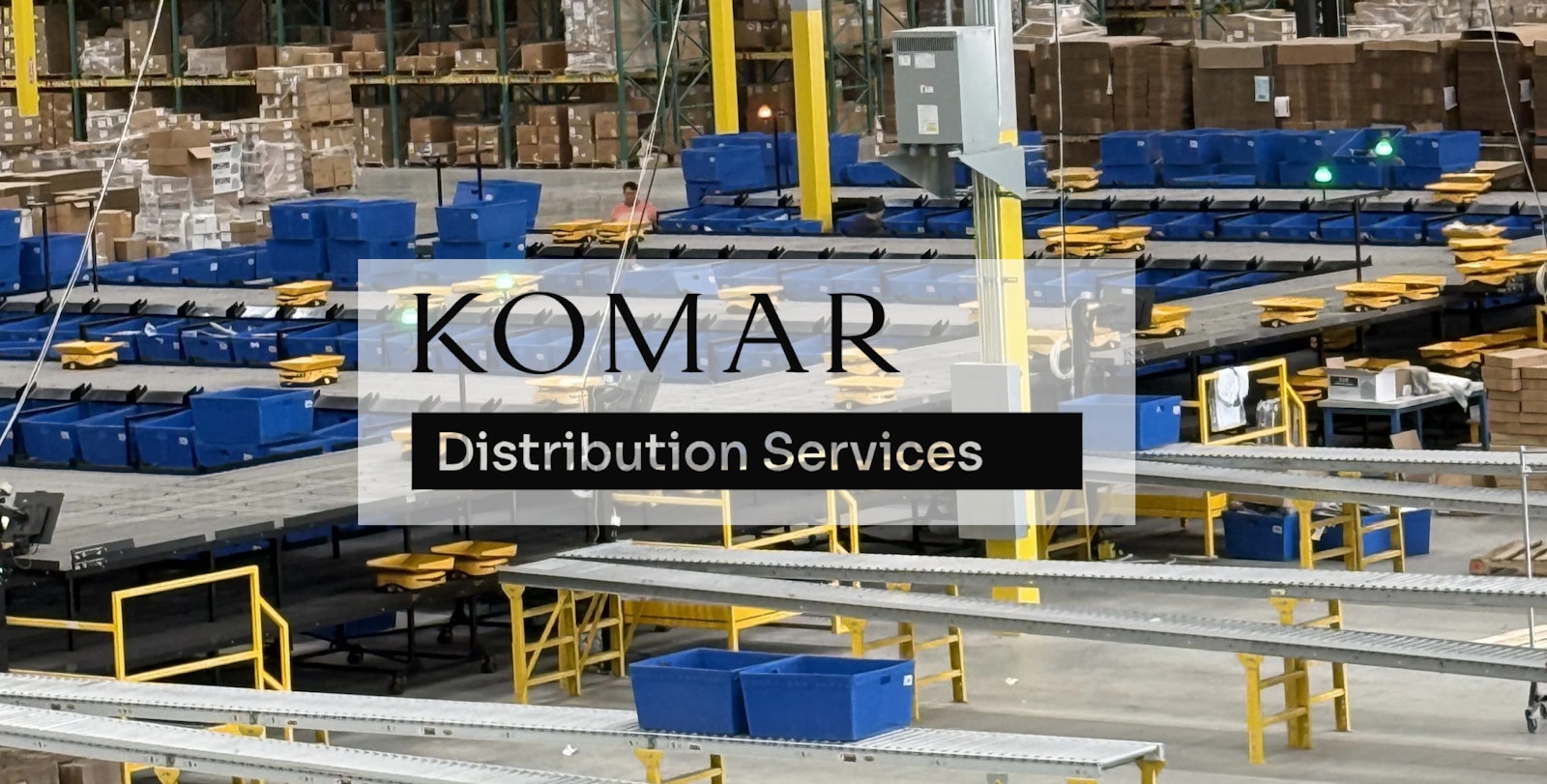
Komar Distribution Services (KDS) helps consumer brands manage warehousing, fulfillment, and distribution across ecommerce, retail, and wholesale channels.
As the KDS customer base continued to grow, each new implementation brought a different combination of ecommerce platforms, ERPs, marketplaces, data structures, sales channels, and operational requirements. KDS already had a strong internal integration team and deep warehouse expertise, but it saw an opportunity to add flexible delivery capacity and respond even more effectively to changing customer needs.
By combining KDS integration and warehouse expertise with MindCloud’s platform and delivery resources, the teams created a more scalable model for API-based and other compatible integrations. Over the last year, KDS has reduced the time required to complete many API integrations by approximately 50%, helping create additional capacity, support faster implementations, and provide a more predictable customer experience.
“Technology requirements are changing quickly, and every customer brings a different combination of systems and operational needs. We need to be flexible, move quickly, and adapt to the tools our customers use. MindCloud has helped us expand that flexibility and increase our integration capacity while allowing our internal team to remain focused on the customer experience and broader operational priorities.”
— Eric Ritchey, Vice President of Sales, Komar Distribution Services
For third-party logistics providers, integration capacity plays an important role in how quickly new customers can move through implementation. Every customer brings a different mix of ecommerce platforms, ERPs, marketplaces, APIs, webhooks, data requirements, and warehouse rules. The KDS experience shows how a 3PL can support that complexity through a flexible and scalable integration model.
Results at a Glance
Approximately 50% Faster API Integrations
KDS has reduced the time required to complete many API-based customer integrations by approximately half over the last year.
Expanded Implementation Capacity
Additional platform and delivery resources allow KDS to support more simultaneous implementations and respond more effectively to accelerated launch requirements.
Flexible Delivery
KDS can build integrations internally or extend its capacity through MindCloud’s managed delivery team.
Complex Environments Supported
The model supports ecommerce platforms, ERPs, APIs, webhooks, warehouse systems, custom applications, and customer-specific operating requirements.
Who Is Komar Distribution Services?
Komar Distribution Services is a national third-party logistics provider helping consumer brands manage warehousing, fulfillment, distribution, and complex omnichannel operations. With strategically located facilities across California, Oklahoma, and Georgia, KDS supports growing and established brands selling through ecommerce, retail, wholesale, marketplaces, and other sales channels.
KDS combines large-scale warehouse infrastructure with tailored workflows, technology integration, Foreign Trade Zone capabilities, and hands-on operational support. Its network includes approximately 2.8 million square feet of conventional and activated FTZ space and supports more than 1,000 sales channels.
Those businesses do not arrive with one standard technology stack. One customer may rely on Shopify and Amazon. Another may use an ERP, custom application, retailer network, or a combination of systems that were never designed to work together.
Before inventory can be received and orders can begin flowing, KDS must connect each customer’s systems with its warehouse operations. Depending on the business, that may involve product data, sales orders, purchase orders, inbound receipts, inventory updates, fulfillment confirmations, tracking information, carrier mappings, and customer-specific warehouse rules.
For KDS, integration is not a separate technical project. It is one important workstream within the broader customer onboarding and implementation process.
Supporting Growth as Customer Integration Requirements Expand
KDS already had a strong internal integration team with deep knowledge of its warehouse operations and customer requirements.
New customers often need to launch quickly, especially when transitioning from another provider or responding to changing operational needs. At the same time, KDS technical resources support existing customers, internal systems, warehouse operations, and other business priorities.
As customer demand and integration complexity increased, KDS saw an opportunity to add flexible delivery capacity without disrupting the work of its internal team.
KDS had previously used a combination of integration software and outside consulting resources. As customer requirements became more varied, the company wanted a delivery model with clearer ownership and the flexibility to support both straightforward and highly customized implementations.
KDS looked for a partner that could complement its internal expertise, adapt to each customer, and support compatible integration projects from development through ongoing delivery.
Are integration demands stretching your team?
Take the free Integration Health Check to assess manual work, reliability, ownership, and the ability to add new systems. Get a personalized health score and three practical priorities based on your answers.
Expanding KDS Integration Capacity
KDS selected MindCloud to complement its internal integration team with additional platform and delivery capacity.
KDS can build and manage integrations directly on the MindCloud platform when its team wants to retain development ownership. For other projects, KDS can extend its capacity by working with MindCloud’s managed delivery team.
The KDS team defines the warehouse requirements, operational rules, and desired customer experience, while MindCloud supports the technical delivery.
Depending on the project, MindCloud can support:
Requirements gathering
System connectivity
Data mapping
Workflow development
Testing and validation
Customer coordination
Production deployment
Monitoring and ongoing support
This allows KDS to choose the right delivery model for each compatible project while preserving internal oversight and maintaining a clear, accountable integration partner.
“MindCloud adapts each integration to the customer instead of forcing a one-size-fits-all solution. That gives us the flexibility to build on the platform ourselves or extend our capacity through their delivery team, depending on what best fits the implementation.”
— Eric Ritchey, Vice President of Sales, Komar Distribution Services
That flexibility is especially valuable when a customer’s systems, warehouse processes, or launch requirements fall outside a standard connector.
Customer Example: Connecting Mustard Made’s Cin7 Environment to Manhattan SCALE
Mustard Made is a home and lifestyle brand known for its colorful metal lockers.
As the company prepared to begin fulfillment with KDS, it needed to connect Cin7 with the KDS Manhattan SCALE warehouse management system. There was no native integration between the two platforms.
The project was also taking place while Mustard Made was moving inventory into a new U.S. warehouse and refining how orders, inventory, and fulfillment data would move across its international operations.
KDS, Mustard Made, and MindCloud worked together to define and deliver the integration connecting Cin7 and Manhattan SCALE.
Order and Product Data
The integration supported:
Product and item synchronization
Sales orders
Parent and child SKU relationships
Multi-box products
Inventory and Fulfillment
MindCloud also connected:
Purchase orders and inbound receipts
Receipt confirmations
Inventory updates
Partial fulfillment and backorders
Fulfillment and tracking confirmations
Shipping and Routing
The workflows included:
Carrier creation and mapping
Multiple tracking numbers
Rate-shopping requirements
Third-party carrier billing
East Coast and West Coast fulfillment routing
Several operational requirements were still evolving as the project progressed. The three teams collaborated through weekly calls, testing, deployments, and workflow updates. As new scenarios emerged, KDS helped define the operational requirements while MindCloud adjusted the integration to support them and keep the implementation moving forward.
“I’ve worked with more than 10 integration partners in my career, and MindCloud stood out for how responsive, proactive, and technically capable the team was. They helped us quickly connect our Cin7 environment with KDS’s Manhattan SCALE WMS, adapted as requirements evolved, and kept the implementation moving forward.”
— Pedro Martinez, Head of Logistics & Fulfillment, Mustard Made
The result was a working integration between Mustard Made’s Cin7 environment and the KDS Manhattan SCALE WMS.
Creating a Repeatable 3PL Integration Model
KDS needed more than a series of successful one-off integrations. It wanted a model that could support very different customers without rebuilding every workflow from the ground up.
KDS and MindCloud use reusable foundations for common integration patterns while preserving the flexibility to adapt each implementation.
For example, a Shopify-to-Manhattan SCALE order workflow can become the starting point for another Shopify customer. The teams can then update the store connection, field mappings, carriers, routing rules, and customer-specific logic without recreating the entire integration.
What KDS reuses is not a rigid connector. It is the proven foundation behind the workflow.
The core workflow logic can be reused, while the system connections, data mappings, carrier configurations, routing rules, and customer-specific requirements are adapted for each implementation.
The same model also works for customers outside a standard ecommerce environment.
Wellipets, for example, used a custom ERP that delivered order data through webhooks. KDS defined the warehouse requirements, while MindCloud built the transformation and processing logic required to move the data into the KDS environment and return the necessary results.
The integration went live and began receiving orders daily, demonstrating that KDS could support customers whose systems did not fit a standard connector model.
Across its work with KDS, MindCloud has supported systems and operational requirements including:
Shopify
Amazon
Cin7
BlueCherry
Custom ERPs
APIs and webhooks
Manhattan SCALE
Multiple warehouses
Customer-specific routing, labeling, and packing requirements
This gives KDS a consistent process for development, testing, launch, monitoring, and support, even when customer systems and operational requirements change.
Results: Faster API Integrations and Expanded Capacity
Over the last year, KDS has reduced the time required to complete many API-based customer integrations by approximately 50%.
For simpler customers, the integration work can now move quickly enough that it is less likely to determine the overall implementation timeline. More complex onboarding programs may still require additional time for operational configuration, data validation, user acceptance testing, retailer requirements, EDI certification, inventory transition, and launch planning.
The additional platform and delivery capacity has also expanded the number of simultaneous opportunities KDS can evaluate and support, particularly when customers have accelerated timelines or nonstandard technology requirements.
The internal impact is equally important.
KDS can assign projects to the delivery model that best fits the customer, with its internal team maintaining operational oversight while MindCloud supports agreed technical work, coordination, testing, deployment, and production support.
Integration planning still requires active collaboration, but KDS now has a more flexible and predictable way to allocate technical resources across new implementations and ongoing customer priorities.
Looking Ahead: Exploring Additional EDI and Workflow Capabilities
KDS is also beginning to test additional MindCloud capabilities, including EDI-related functionality and broader workflow automation opportunities. These areas are still in the early stages, but the work is helping both teams explore how the platform may support more complex integration requirements and additional parts of the customer implementation process.
KDS is excited to build on the progress already achieved with API integrations and identify additional ways MindCloud may help improve efficiency, flexibility, and the customer experience as the partnership continues to grow.
What the KDS Model Means for Other 3PLs
The KDS experience is not limited to one WMS, customer, or technology stack. The same model can help other 3PLs expand the range of compatible customer environments they can support while using internal and external integration resources more strategically.
Every 3PL customer brings its own systems, business rules, and operational requirements. The goal is not to eliminate that complexity. It is to build a scalable way to support it.
With a flexible integration platform and delivery model, 3PLs can:
Support more ecommerce, ERP, API, webhook, and custom-system environments
Reduce avoidable integration delays within the broader onboarding process
Reuse proven workflow foundations without forcing every customer into the same connector
Preserve customer-specific mappings, routing rules, and warehouse logic
Expand integration capacity without immediately expanding the internal team
Maintain clear accountability from implementation through ongoing support
KDS can now evaluate opportunities with greater confidence, knowing it has a flexible model for supporting different customer systems and operational requirements.
Integration has become a more scalable part of the infrastructure supporting the continued growth of Komar Distribution Services.
Build a More Scalable 3PL Integration Model
MindCloud helps 3PLs connect compatible customer ecommerce platforms, ERPs, marketplaces, APIs, webhooks, and custom systems with their warehouse operations.
Build integrations on the MindCloud platform or work with the MindCloud team to manage agreed implementation activities from discovery through ongoing support.